Bowtie revenue model Salesforce
Bowtie Revenue Model In Salesforce
How to use the Bowtie revenue model to evaluate Salesforce data across Acquire, Convert, and Expand motions before GTM strategy depends on it.
Short answer
The Bowtie revenue model helps Salesforce teams evaluate whether acquisition, conversion, and expansion evidence is strong enough to support GTM decisions.
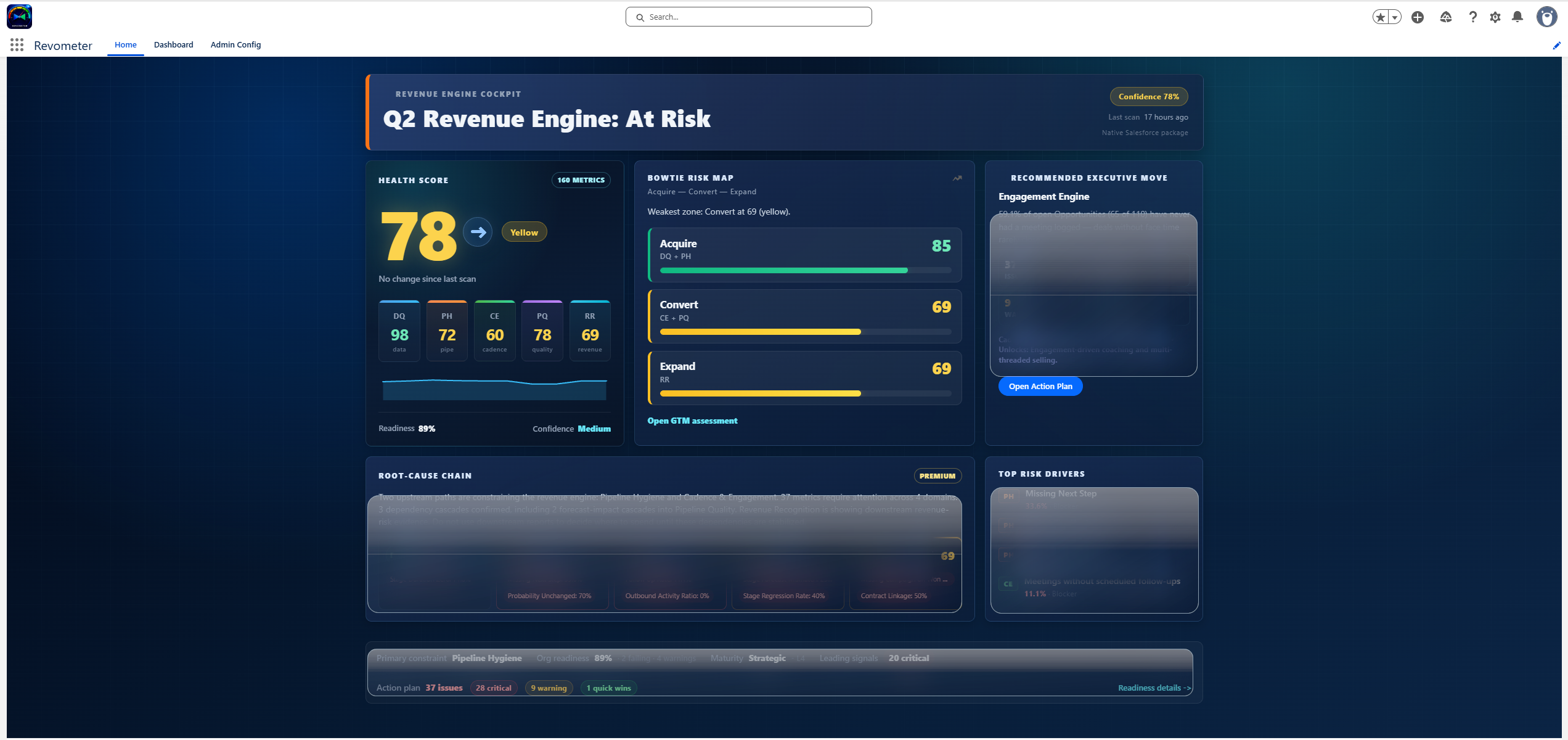
Acquire depends on source and fit evidence
The left side of the Bowtie asks whether Salesforce can explain where demand comes from and whether the right accounts are entering the funnel.
Lead source and channel fields show acquisition origin.
Account context fields explain segment and fit.
Lifecycle fields show whether demand is structured enough to measure.
Convert depends on pipeline motion
The middle of the Bowtie asks whether the opportunity record reflects real selling motion. Stage age, close-date behavior, activity coverage, and next steps all affect confidence.
Stage evidence should reflect real progression.
Cadence fields should show current activity and buyer engagement.
Pipeline quality fields should support forecast review.
Expand depends on post-sale revenue context
The right side of the Bowtie asks whether customer and revenue data can support renewal, expansion, and retention decisions.
Closed-won products and contracts must be usable.
Renewal fields should be available before risk review.
Revenue context should connect customer outcomes to future motion.
FAQ
Why map Salesforce data to the Bowtie?+
The Bowtie shows which GTM motion the data can support. A CRM can be strong for Convert while still weak for Acquire or Expand.
Does Revometer replace a Bowtie strategy process?+
No. Revometer scores the Salesforce evidence that Bowtie strategy depends on, so the strategy process starts with clearer data confidence.
Related reading